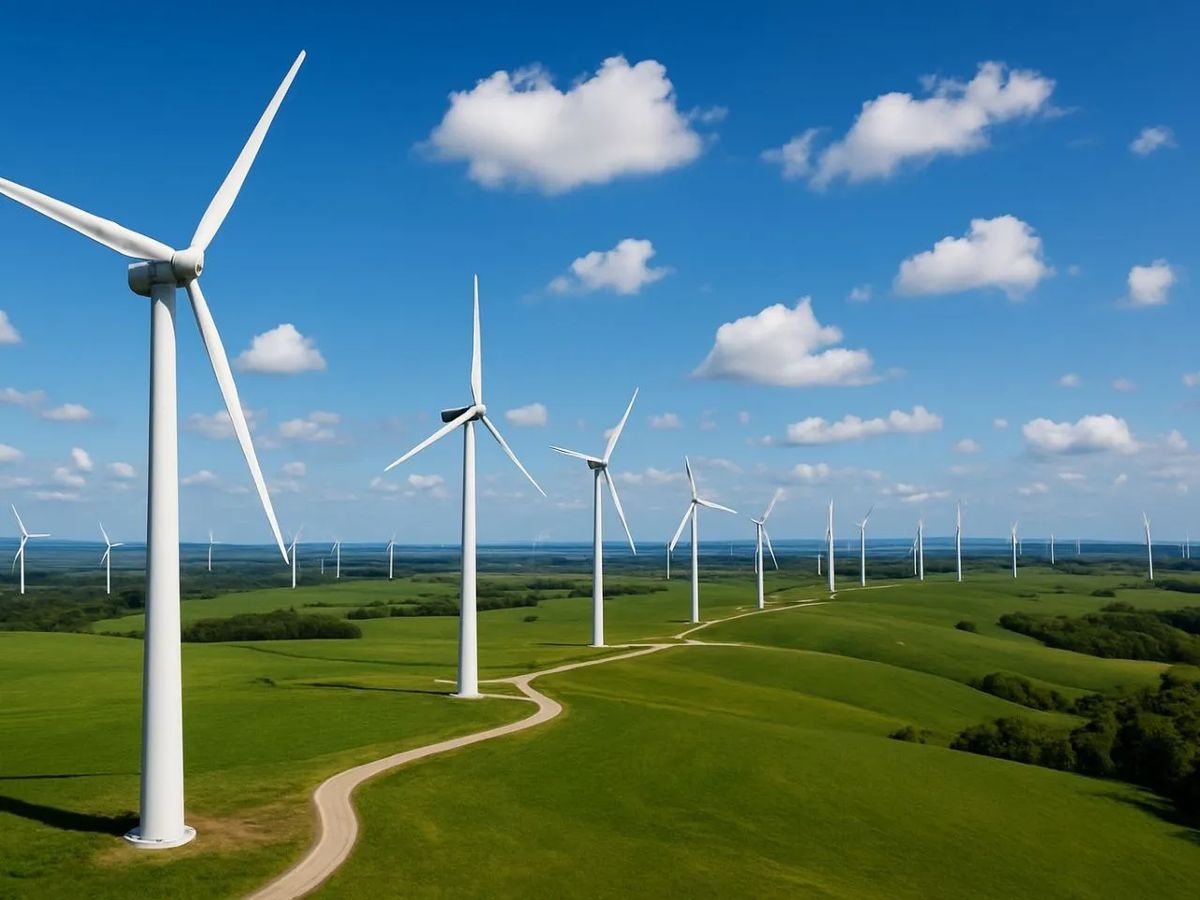
The global energy transition has entered a more mature, complex phase. The narrative driving the sector has fundamentally shifted from abstract, moral net-zero declarations to pragmatic, competitive economics. Driven by the dual forces of an artificial intelligence boom and urgent national security concerns, global clean energy investment has broken historic records, climbing to an astonishing $2.2 trillion.
For institutional investors, venture capital, and retail traders alike, the playbooks of five years ago no longer apply. To unlock true value in today's renewable landscape, you have to look past the generation assets and focus on system integration.
The Real Drivers: Energy Security and AI Data Centers
The economic calculus of green investing has transformed. While climate goals remain a backdrop, two new market forces are actively dictating capital flows:
The AI Power Demand: Artificial intelligence and massive cloud data centers have triggered an insatiable hunger for electricity. With tech giants scrambling to secure gigawatts of 24/7 clean power, tech companies are acting as primary off-takers for massive utility-scale projects. Access to clean energy is now the ultimate bottleneck for digital growth.
Geopolitical Resilience: Recent global energy supply disruptions have proven that localized, independent power grids are vital. Governments are aggressively incentivizing domestic clean-tech manufacturing, turning renewables into a matter of state security and defense.
Mapping the Capital: Where the Money is Flowing
Adding more solar panels and wind turbines is no longer enough; the real value is shifting toward supporting infrastructure. The core pillars of the energy investment ecosystem break down across specific, highly targeted sectors:
Investment SectorCurrent Market DynamicKey Focus AreasSolar PVReached a point of absolute scale, attracting over $1 billion per day globally due to an 80% cost reduction over the last decade.Utility-scale farms, commercial onsite generation, advanced perovskite modules.Grid InfrastructureThe ultimate bottleneck. Over 2,500 gigawatts of projects sit in connection queues globally.Modernizing transmission lines, high-voltage direct current (HVDC) networks.Energy Storage & BESSEssential for managing the natural intermittency of wind and solar power.Battery Energy Storage Systems (BESS), smart demand-management software, grid flexibility.Navigating the Frontier Risks
Despite exponential revenue growth across the green economy, this sector is not without strict headwinds.
The Cost of Capital Crisis: While capital volume is at an all-time high, over 70% of clean energy investment is heavily concentrated in wealthy nations and China. Emerging economies—where energy demand is actually growing the fastest—face financing costs two to three times higher due to macroeconomic risk premiums and policy fragmentation.
Furthermore, intensifying trade restrictions and export controls on critical transition minerals mean that vertical supply-chain integrity is now a key risk factor that investors must closely audit before backing any hardware-heavy project.
The Investor’s Verdict
The green economy is no longer a niche, speculative play—it has surpassed a massive $10 trillion market capitalization milestone. However, the easy money from simply building capacity has been made. The alpha over the next decade belongs to the enablers: the infrastructure, software, and storage assets that allow this massive tidal wave of clean electrons to safely connect to the grid and power our digital future.