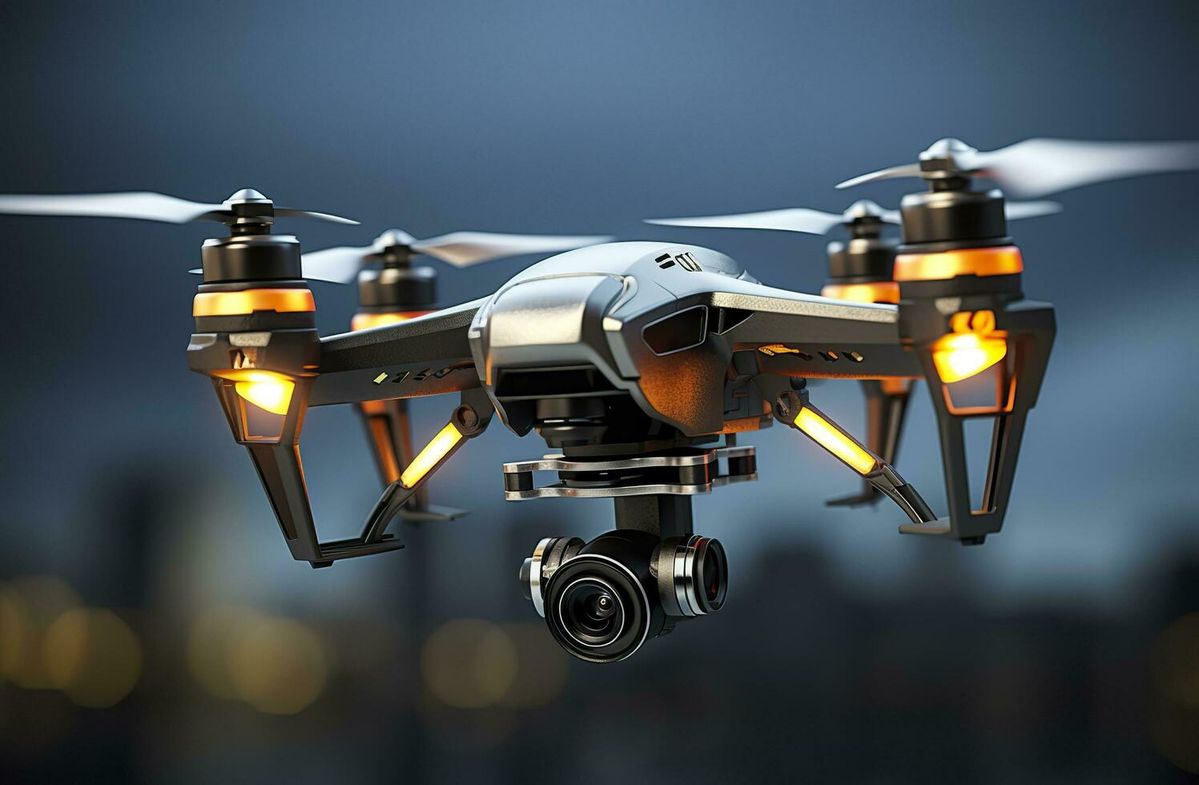
The global investment landscape is undergoing a profound paradigm shift. Traditionally, "infrastructure" conjured images of concrete highways, steel bridges, and deep-water ports. Today, institutional investors and private equity firms are looking upward and inward—specifically toward the intersection of digital infrastructure and autonomous drone technology.
Once dismissed as high-tech aerial gadgets, Unmanned Aerial Vehicles (UAVs) have evolved into critical, data-collecting nodes within a broader, connected industrial ecosystem. As a result, forward-thinking capital is flooding into the digital foundations required to scale these airborne assets.
The Symbiotic Relationship: Data, Networks, and Wings
Drones do not operate in a vacuum. To move beyond localized, line-of-sight operations toward true commercial autonomy, they require a highly sophisticated digital backbone. This reality has turned drone deployment into a primary driver for specific digital infrastructure assets:
5G and Edge Computing: Real-time drone mapping, AI-driven asset inspections, and autonomous flight path corrections require massive data processing with ultra-low latency. Investors are heavily backing edge-computing data centers to process this sensory data closer to the drone's flight path.
Geospatial and AI Software Infrastructure: A drone is only as valuable as the data it extracts. Venture capital is aggressively targeting "InfraTech" software solutions—platforms that leverage AI and machine learning to convert raw drone photogrammetry and LiDAR data into predictive maintenance alerts or 3D digital twins.
Key Sectors Driving the Investment Boom
Smart money is flowing into drone and digital infrastructure integrations across several highly profitable, recession-resilient sectors:
1. Construction and Mega-Infrastructure Projects
Instead of sending surveying teams to manually audit massive, dangerous sites, developers use automated drones for volumetric stockpile analysis and structural health monitoring. Regulatory bodies worldwide have certified tens of thousands of remote pilots, accelerating the use of drone-assisted Building Information Modeling (BIM) in metro tunnels, highways, and industrial hubs.
2. Energy and Renewable Grid Maintenance
Inspecting miles of remote utility lines, wind turbine blades, and vast solar fields is historically slow and hazardous. Drones equipped with thermal sensors can scan acres of infrastructure in minutes, feeding data directly back into decentralized cloud platforms to identify energy leaks or equipment degradation.
Understanding the Risks
While the upside is undeniable, investing in this frontier requires navigating unique headwinds:
Regulatory Frameworks: Commercial drone scalability relies heavily on aviation frameworks approving Beyond Visual Line of Sight (BVLOS) flights.
Cybersecurity Threats: As drones collect and stream sensitive enterprise and public data, they become prime targets for cyberattacks, making data encryption infrastructure a vital collateral investment area.
The Verdict
We are moving rapidly toward a "Construction 4.0" era, where intelligence-led autonomy operates as a cohesive execution layer. For institutional investors, the strategy is no longer just about buying hardware. The true alpha lies in funding the digital infrastructure—the fiber networks, edge servers, and cloud ecosystems—that will keep tomorrow's economy flying high.